
Lake Forest City Directory Holdings
Lake Forest never got its own shelf of city directories. The early volumes sit in countywide catalogs under Orange County. El Toro is listed inside them. The National Archives names three such years: 1926, 1929, and 1931. Searchers should use the older place name and the county catalog phrase. That pulls these reels.
| Collection | Years or span | Publisher | Where held | Access |
|---|---|---|---|---|
| Orange County directories including El Toro | 1926, 1929, 1931 | Not stated | NARA microfilm inventory | NARA film; countywide |
| Further Orange County directory holdings | Later years not verified | Shelf check needed | Orange County Archives | Ask about later print and reverse runs |
| California city and phone-book catalogs | Catalog query | Varies | California State Library catalogs | Search Orange, then confirm community |
| OCPL history and newspaper companions | 1920s to 1980s; 1987-current; 2003-current | Databases and newspapers | OC Public Libraries branches and digital resources | Branch or card limits |
A missing year does not mean publication stopped. Later El Toro editions and any reverse street sequence may still sit on a shelf. Ask the keeper before assuming. A volume can be countywide, city-specific, alphabetical, street-oriented, or simply a phone book. The NARA Orange County directory inventory anchors the early run with three El Toro-inclusive years. Later coverage stays an open question.
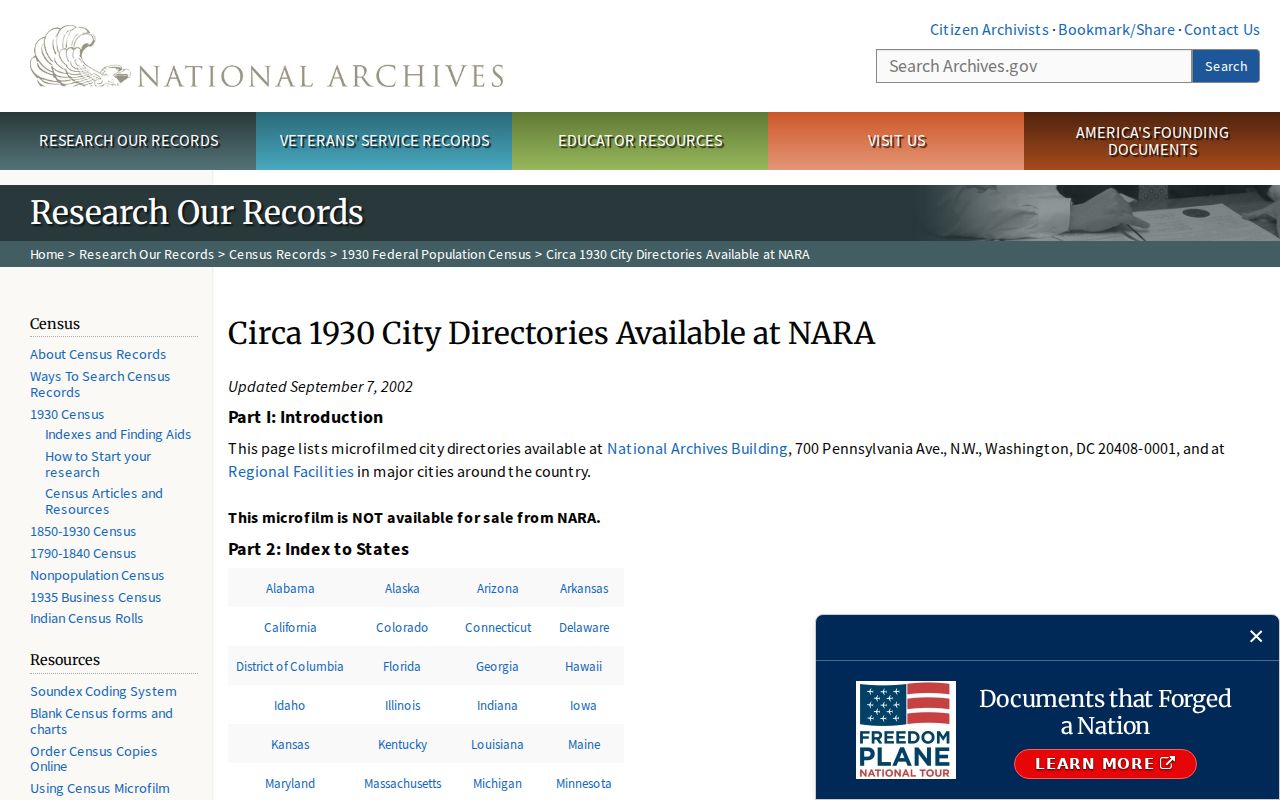
The catalog image shows a county-level film inventory for the Lake Forest area. Check reel contents by place name inside each volume rather than assuming a city-only listing.
El Toro in Lake Forest Directories
Lake Forest is a late index term. The city incorporated on December 20, 1991. Before that, the community was called El Toro for well over a century. So an older address may appear under El Toro in a directory, newspaper, census page, or property file. That earlier name links the modern city to its full record trail.
A household trail in this area can split across headings. Before the 2000 annexation, Foothill Ranch and Portola Hills sat outside the city limits. A family may appear under an older community name in early volumes, and under Lake Forest later. The land history runs deeper still. Rancho Cañada de Los Alisos was the 1846 grant to José Serrano. It gave way to El Toro's farming and railroad era before the modern city took shape. In a residents directory, each name marks an era rather than a simple postal label. Searching both headings pays off.
Where Lake Forest City Directory Sources Reside
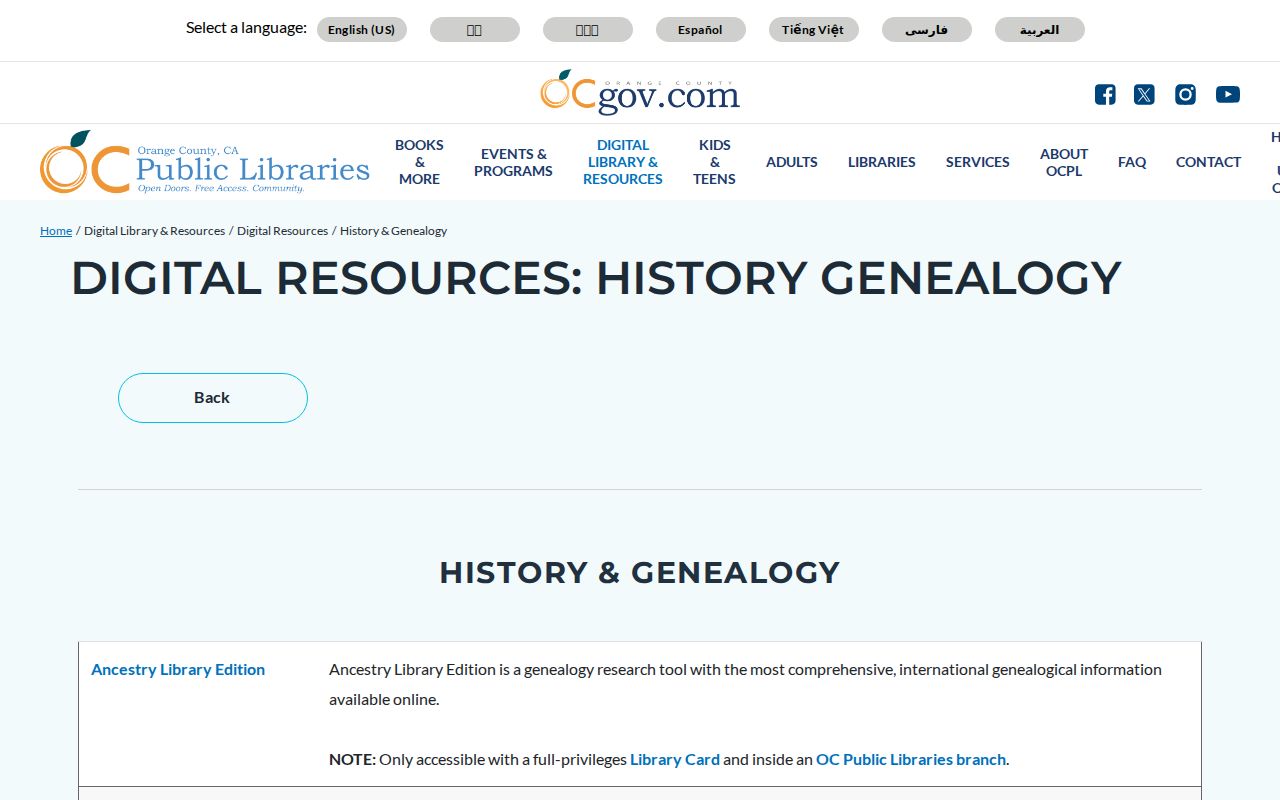
OC Public Libraries genealogy resources connect a residents directory search with obituary guidance, reference help, and local family-history organizations. Ancestry Library Edition requires a full-privileges card in branch. It can pair census pages and city directory listings with vital indexes, immigration, and probate material. HeritageQuest and Fold3 carry card restrictions of their own. Together they let a street directory lookup sit beside broader record work.
Placing a directory search next to obituary and family-history checks gives a missing name more than one way to surface. A directory record alone can stay quiet, and a family-history file may hold the clue it lacks. The El Toro Library sits at 24672 Raymond Way in Lake Forest. It is open Monday through Thursday from 10 a.m. to 7 p.m. and Friday through Saturday from 9 a.m. to 5 p.m. The phone is 949-855-8173. The branch kept its El Toro name. That choice repeats a historical clue anyone using older street directory volumes will recognize.
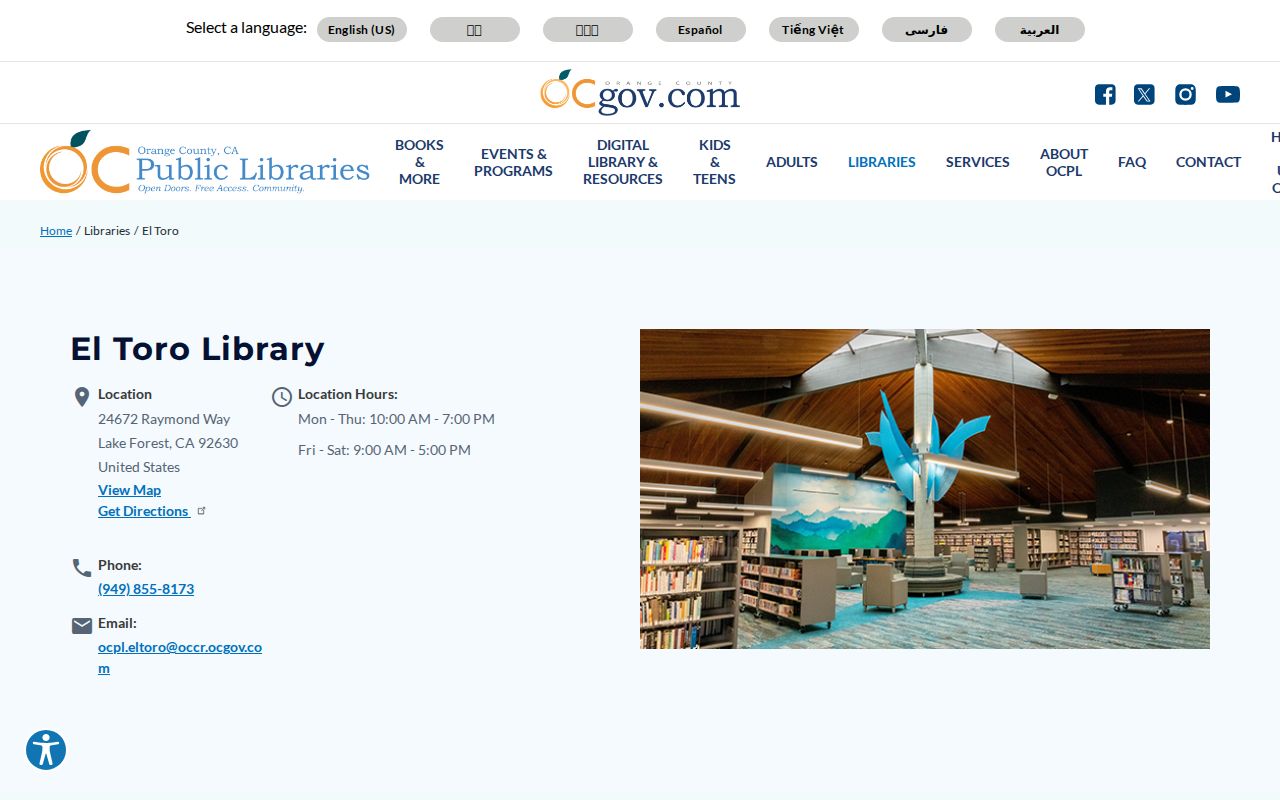
The El Toro branch handles shelf and card questions. Foothill Ranch Library covers the annexed northeast. OCPL branches hold selected newspaper issues spanning the 1920s through the 1980s. NewsNews adds Orange County Register coverage from 1987 forward and Irvine World News from 2003 forward. These papers help bridge address and family-history gaps. They are not current resident registers, though. The OCPL history and genealogy resource page shows how database access fits alongside a physical city directory search at the branch.
The census and the newspaper hint at people, but the directory volume is the evidence. A city directory records a household in its own words and its own year. In Lake Forest research, that makes the residents directory the anchor. It ties together the other two clues.
Note: Call the branch before a visit because database eligibility and shelf holdings can differ by location and card status.
How Lake Forest Directory Entries Read
Most Orange County entries start in an alphabetical section. The trick is reading them whole. Surname, given name or initial, spouse, residence mark, occupation or employer, and street address all travel together. They form one cluster. Treat the cluster as a household clue fixed in time. It proves neither ownership, kinship, nor continued presence. It only shows that the volume placed the name there. Business listings run separately and may add a proprietor, a telephone, and a business address.
| Name | Surname followed by given name or initial; the head of household may be listed first. |
|---|---|
| Spouse | A spouse may appear in parentheses beside the primary name. |
| Residence mark | h can mean home or residence; r can mean roomer or resides, depending on the volume. |
| Occupation or employer | A trade, employer, or business address may help separate people with the same name. |
| Street address | House number and street tie the name to a place for that directory year. |
| Widow or household clue | wid followed by a deceased spouse, same-address surnames, or adult children can open a family-history lead. |
Do not turn an h or r mark into a deed. Conventions varied between publishers, and the marks are residence clues, not a modern occupancy file. A Lake Forest parcel or property record needs the recorder, not the directory.
Lake Forest Directory Terms Decoded
Find the volume's abbreviation key before you chase any name. The codes shift between publishers and years. A reverse street section only helps when the volume actually has one, so these terms promise no more than each reel contains.
- Criss-cross directory
- An address-first section that may list a street and house number before an occupant or telephone subscriber. Its presence must be checked volume by volume.
- Householder index
- An index organized around the household head, or sometimes an address. The volume's arrangement decides which meaning applies.
- Abbreviation key
- The guide to marks such as
h,r, andwid. Read it before expanding any entry. - Countywide volume
- A book that covers several Orange County communities, including El Toro, rather than a Lake Forest-only directory.
Photograph or transcribe the key before you copy any names. Keeping the legend beside your census extract, obituary note, or deed index entry preserves the meaning of every mark.
Trace a Lake Forest Household Across Years
A directory pays off most when each appearance is copied exactly. Then pair it with another record. Begin with a known El Toro or Lake Forest name. Add an approximate year and one address clue. From there, compare the verified 1926, 1929, and 1931 volumes against nearby census years.
- Search surname, given name, initials, spouse, and documented variants. Copy the entry and abbreviations.
- Place 1926 between the 1920 and 1930 federal census households. Compare names, relationships, and geography.
- Use 1930 beside 1929 and 1931. A one-year change is a lead, not a vital fact.
- Browse a street or criss-cross section if present. Record nearby names and house numbers.
- Verify against a deed or grantor-grantee index, newspaper, and the nearest census.
- For a disappearance, check obituary or death material, probate, deed transfer, and later family names.
Names vanish from directories for many reasons. A move can explain the silence. So can a death, a changed household, a simple omission, or a publication gap. Later addresses, obituaries, probate files, and family names help you tell these cases apart. For a modern Lake Forest address, also ask what the site was in that year. It might have been El Toro, Foothill Ranch, Portola Hills, or undeveloped land.
Lake Forest Directory Years and Census Pairings
The federal census gives you a household frame. A city directory adds a nearer-year address and a name clue. Search by Orange County enumeration geography and by El Toro, and let the period boundaries stand rather than forcing a modern city limit onto an older page.
| Directory clue | Census companion | Use in the comparison |
|---|---|---|
| 1926 El Toro-inclusive volume | 1920 and 1930 | Set an earlier household baseline, then test the later decade for change. |
| 1929 El Toro-inclusive volume | 1930 | Compare names and household structure near the census year. |
| 1931 El Toro-inclusive volume | 1930 | Use next-year differences as leads that need another source. |
| A later volume found by shelf check | 1940 | Bridge the post-1931 trail without assuming an unverified run. |
The 1950 count is the newest census open to everyone. Its 1960 counterpart stays sealed until 2032. For the decades after 1950, Lake Forest history rests on directories, newspapers, deeds, permits, voter materials subject to access rules, and archive holdings that keep filling the gap.
Archives Behind Lake Forest Directory Collections
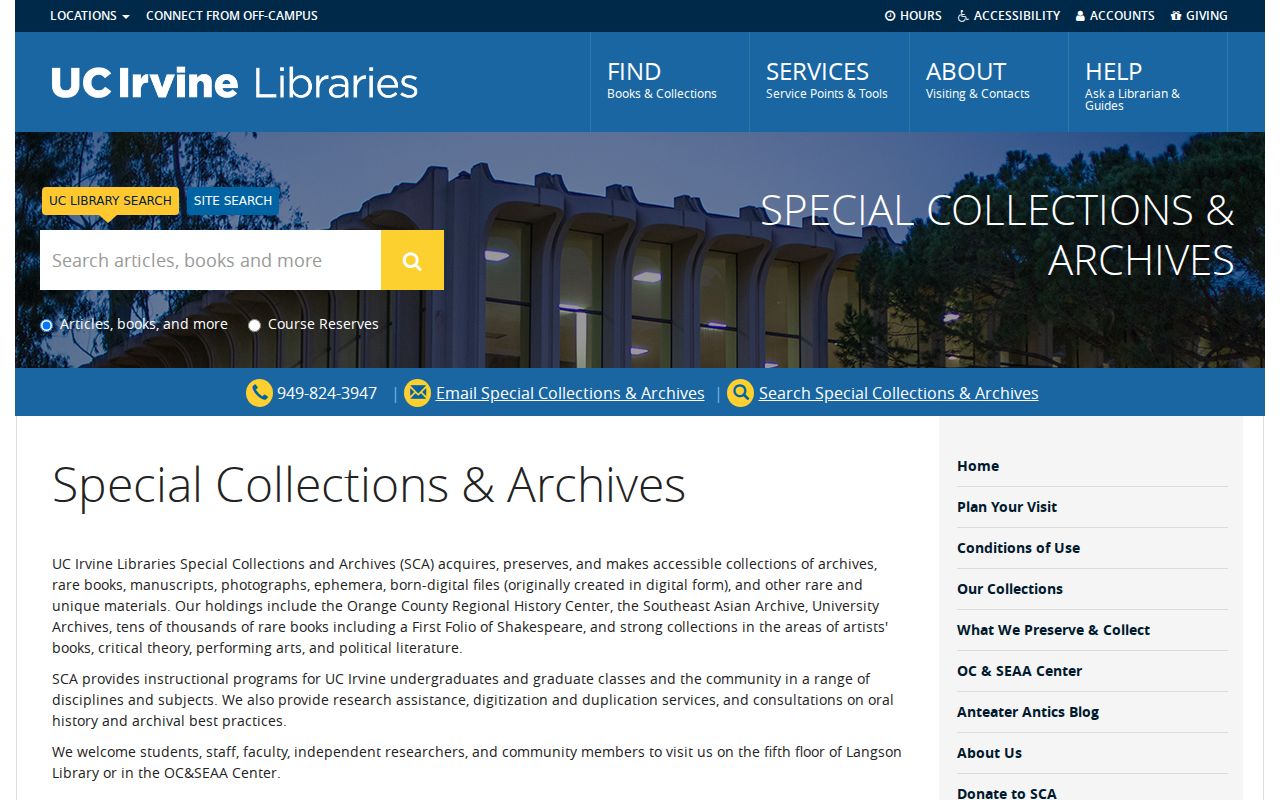
UCI Special Collections holds the Orange County Regional History Collection alongside the Southeast Asian Archive, University Archives, manuscripts, photographs, ephemera, and born-digital files. Research help there can trace a person through organizations, images, oral histories, and regional events. It is a strong companion to any residents directory search.
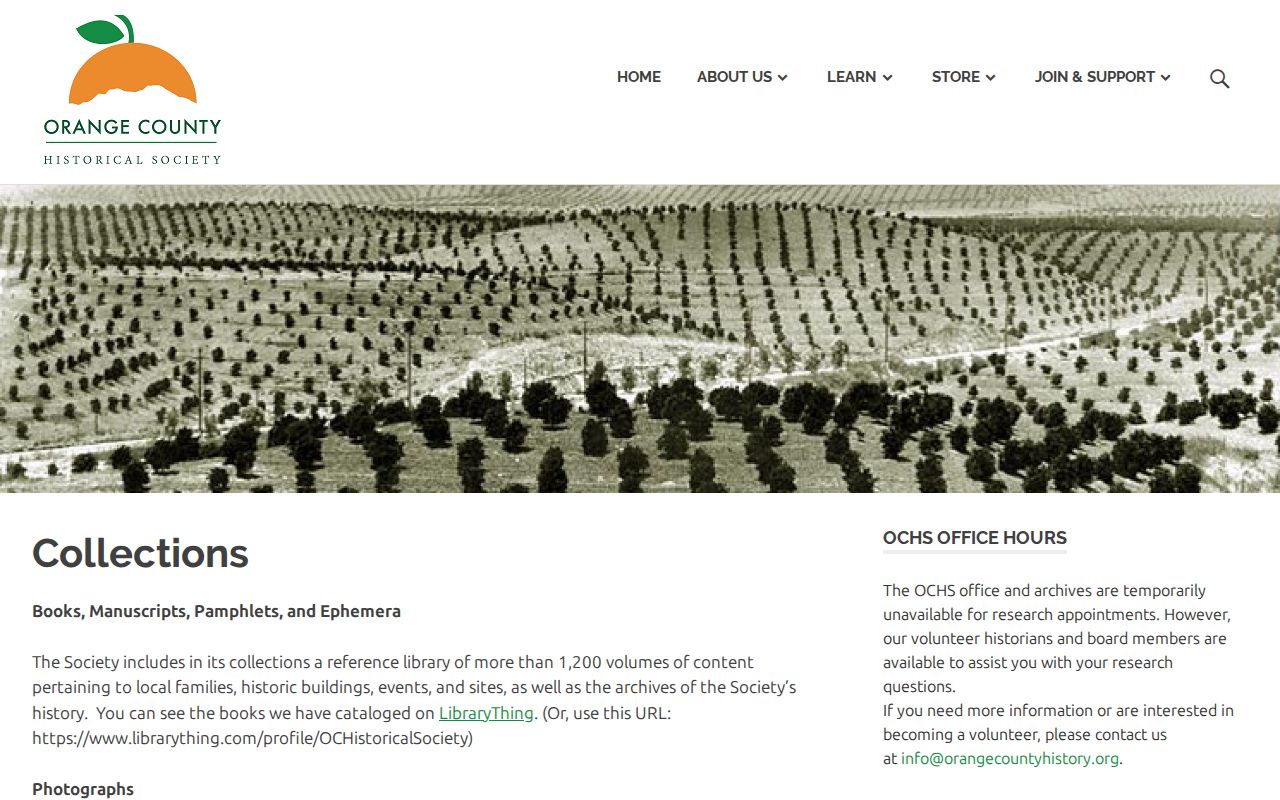
UCI also covers post-1975 county communities, including material tied to MCAS El Toro refugee arrivals. Those files give the residents directory era its human backdrop. The Orange County Historical Society reference library adds more than 1,200 volumes on local families, buildings, events, and sites. The collection spans local buildings and community sites too. A directory entry may only name a surname, a move, a building, or an organization. The library can often explain it.
Bring name variants, dates, place names, and a record type. Also bring an address or tract when you approach the society or the Orange County Archives. Focused questions get the best results. The California State Archives deepens the trail with Orange County naturalizations from 1889 through 1944. It also holds homesteads from 1889 through 1926. Those rolls tie immigrants and land claimants to the county before Lake Forest existed. Heritage Hill offers its own clues through the Serrano Adobe, El Toro Grammar School, St. George's Episcopal Mission, and Bennett Ranch House. They sketch the local era rather than roster its residents.
Lake Forest Directory Record Timeline
Custody changes can shift a single name between county, city, library, and archive keepers. The timeline keeps both the place label and the record holder in view.
- 1863: El Toro was established as an agricultural community and stagecoach stop.
- 1889: Orange County was created, setting the county-era frame for recorder, naturalization, homestead, and archive research.
- 1926, 1929, 1931: NARA's verified Orange County directory inventory includes El Toro in these three volumes.
- December 20, 1991: Lake Forest incorporated as a city, after the older El Toro directory identity.
- 2000: Foothill Ranch and Portola Hills joined Lake Forest through annexation.
Post-incorporation clues take a different path. The Lake Forest city gateway routes requests to City Clerk and Records Management. That office sits at 100 Civic Center Drive, phone 949-461-3400. Its form separates property-related requests and supports inspection or copies. It also promises a determination within ten calendar days. Such files test later addresses rather than historical directory entries.
Lake Forest Directory Limits and Shelf Checks
The NARA years open the door, but they are not a full Lake Forest catalog. Orange County Archives holds directories, newspapers, and photographs. It also holds historic property and vital records, plus other county material worth a visit. Later El Toro years, plus reverse and criss-cross runs, are good questions to raise there. The California State Library also lists city and phone-book catalogs. They are searchable by Orange and by community name.
Only six of more than 20,000 residences predate 1940. For house history, tract records, deeds, permits, and archival sources will usually say more than a generic Sanborn assumption. A directory names a person or street. Other records add the chain of ownership.
When an old lead needs a modern name check, the Resident Lookup route can help. Keep the work to lawful personal research. Confirm facts with the custodian of the records. Never use an old entry to stalk, harass, or harm anyone.
Note: A missing name in a Lake Forest residents directory can stem from coverage limits, spelling drift, privacy rules, a move out of town, or a volume gap, so absence alone proves little.